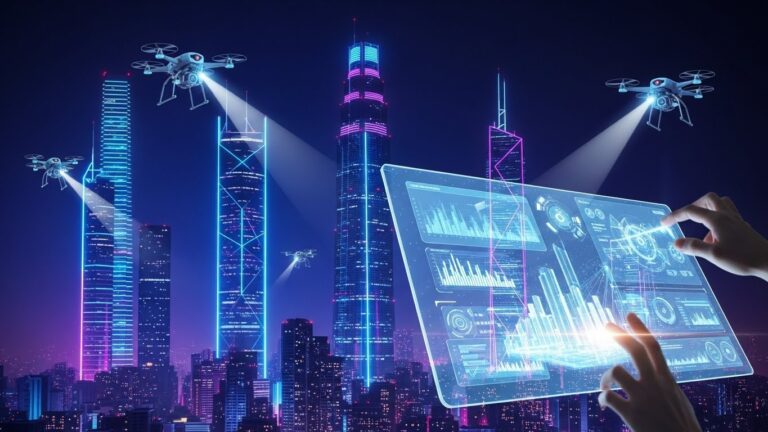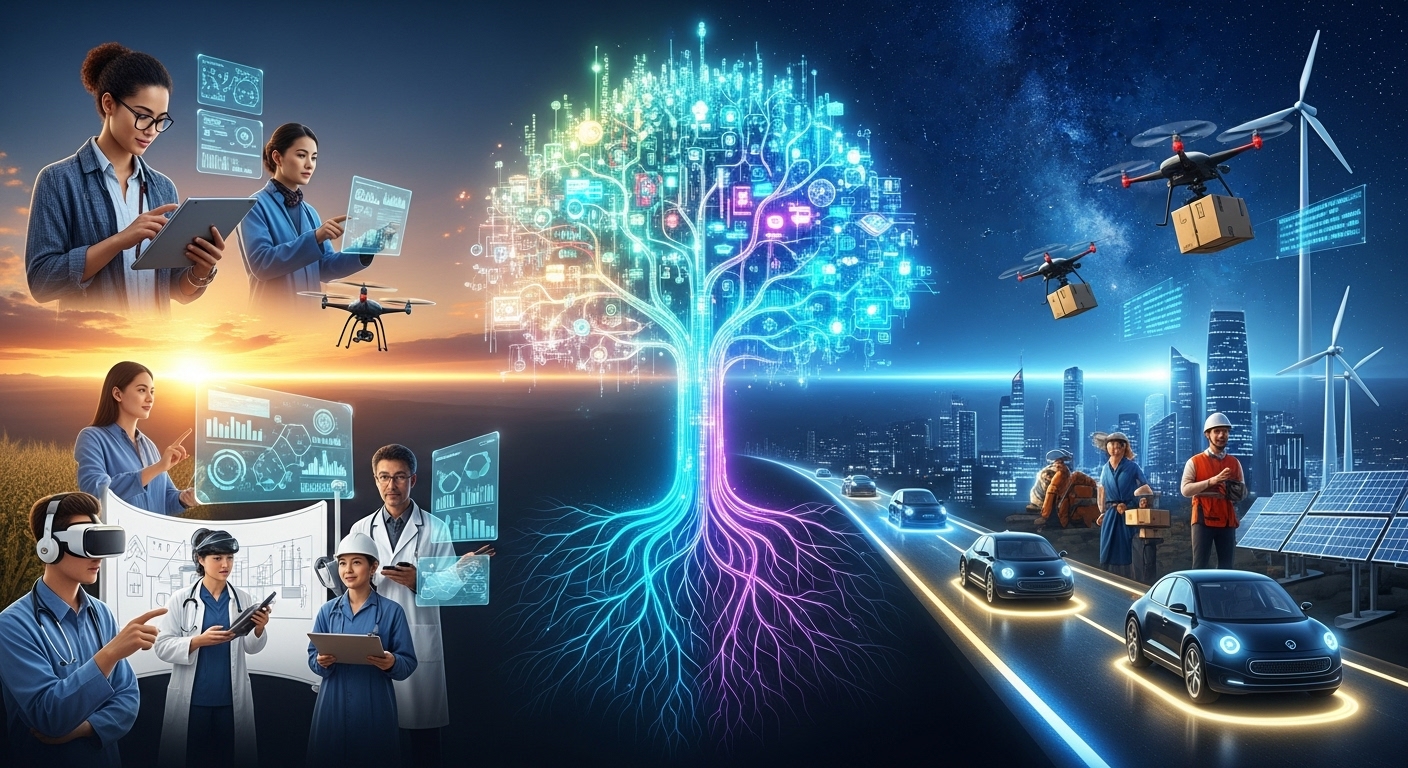
Introduction: The Pulse of the Modern Age
Technology is no longer a luxury, nor is it merely a tool. It has become the pulse of our civilization, a force that defines the rhythm of human life. Every second, somewhere in the world, a new device is being created, an algorithm is being trained, or a piece of code is transforming how we live, work, and think. The story of technology is the story of humanity itself — one of curiosity, creativity, and constant reinvention. From the first mechanical tools to the digital clouds that store our memories, the evolution of technology tells a tale of progress driven by imagination and necessity.
The early 21st century, often described as the digital revolution era, has accelerated this transformation to an unprecedented scale. Today, every sector, from education to healthcare, from finance to entertainment, relies heavily on technological infrastructure. Yet beneath the shiny surface of innovation lies a deeper question — how has technology changed not just our industries, but our identities? To understand this, we must explore the journey, the milestones, and the profound consequences that define our relationship with technology.
The Early Foundations: Seeds of Innovation
The roots of modern technology were planted long before the digital age. Humanity’s earliest inventions — the wheel, fire, and tools — were all forms of technology. These innovations weren’t electronic, but they represented the same fundamental drive: to solve problems, to improve efficiency, and to expand the boundaries of what is possible.
The Industrial Revolution marked one of the first great leaps in human progress through technology. Steam engines powered factories and trains, transforming economies and societies. For the first time, large-scale automation became a reality, setting the stage for future revolutions. By the late 19th and early 20th centuries, electricity, the telephone, and radio emerged — shrinking distances and connecting people in ways previously unimaginable.
As the 20th century progressed, computing entered the scene. The invention of the transistor and the microprocessor opened the door to digital computation. Computers evolved from massive, room-sized machines to personal devices capable of sitting on a desk. Each advancement carried with it a ripple effect — new industries were born, communication became faster, and human thought processes began to adapt to new tools.
The Digital Revolution: A Turning Point in Human History
The late 20th century ushered in the digital revolution, a period of transformation that redefined what it meant to live in a connected world. The birth of the internet was perhaps the single most influential development of this era. Suddenly, information was no longer confined to libraries or experts; it became a living entity accessible to anyone with a connection.
Email replaced letters, websites became the new storefronts, and digital documents replaced paper records. The global economy began to shift from physical goods to information-based services. Software, once a niche field, became the foundation of nearly every modern system. By the early 2000s, technology had moved from being a specialized field to an everyday companion.
This was also the era that saw the rise of mobile technology. The introduction of smartphones brought the world into our pockets. These compact computers blurred the boundaries between personal and professional spaces. No longer were we bound by location — technology became portable, personal, and persistent.
The Age of Connectivity: The Internet and Social Transformation
When the internet first became widespread, few could have predicted its social and cultural impact. It began as a network of networks — a simple means of data exchange — but evolved into the nervous system of modern civilization. The rise of social media platforms turned ordinary individuals into broadcasters, influencers, and creators. Information became democratized, and expression became global.
However, this new digital landscape also changed the nature of relationships and identity. The virtual world began to mirror and sometimes distort reality. People crafted online personas, businesses marketed directly through social channels, and movements for justice, equality, and freedom found new platforms for expression.
While the internet opened doors to education and communication, it also introduced new challenges. Issues like misinformation, privacy breaches, and cybercrime became defining features of the connected world. Yet even these challenges are part of the evolutionary process — forcing us to rethink the balance between technological power and ethical responsibility.
Artificial Intelligence: The New Frontier of Human Thought
No discussion of modern technology is complete without addressing artificial intelligence, the crown jewel of contemporary innovation. AI represents a paradigm shift in how machines interact with the world. Rather than simply following programmed instructions, AI systems can learn, adapt, and make decisions. From recommendation engines on streaming platforms to self-driving vehicles, AI now powers much of our daily experience.
The development of AI has led to breakthroughs in nearly every industry. In healthcare, AI helps detect diseases earlier and more accurately. In education, adaptive learning platforms personalize instruction based on individual progress. In business, predictive algorithms optimize logistics, analyze consumer behavior, and detect fraud.
Yet, AI also raises profound ethical questions. As machines become more capable, what happens to human jobs? As algorithms influence decisions in areas like hiring, law enforcement, and credit approval, how do we ensure fairness and transparency? The rise of AI challenges not only our technological skills but also our moral imagination.
The Cloud Era: The Power of Virtual Infrastructure
Behind the visible face of modern apps and services lies an invisible giant — the cloud. Cloud computing revolutionized how data is stored, accessed, and shared. Instead of relying on local hardware, users now depend on vast networks of remote servers that host everything from photos to enterprise software.
The cloud has enabled scalability, collaboration, and innovation at levels previously impossible. Startups can build global products without owning a single data center. Businesses can analyze massive datasets without investing in expensive infrastructure. Even individuals benefit from cloud-based tools that allow them to work, learn, and create from anywhere.
This shift toward virtual infrastructure also highlights the growing interdependence of technology systems. A failure in one part of the network can have cascading effects across industries and nations. The reliance on cloud systems underscores the need for cybersecurity and resilience in an increasingly digital world.
The Internet of Things: When Everything Becomes Smart
The next evolution of connectivity has come in the form of the Internet of Things (IoT) — a vast ecosystem where physical objects are equipped with sensors and connected to digital networks. From smart homes to wearable devices, IoT bridges the gap between the physical and digital realms.
Smart thermostats learn our habits and adjust temperatures automatically. Fitness trackers monitor health metrics in real-time. Cities are becoming smarter with connected traffic systems, waste management, and energy grids. IoT not only enhances convenience but also generates immense amounts of data that can be analyzed to improve efficiency and sustainability.
However, the proliferation of connected devices introduces security vulnerabilities. Each device represents a potential entry point for cyber threats. Managing this interconnected web requires robust data protection policies and innovative security solutions.
Biotechnology and the Digital Human
While digital technology transforms how we communicate and work, biotechnology is transforming what it means to be human. The integration of biology and technology — often referred to as bioinformatics or biotechnological convergence — is opening doors to possibilities once confined to science fiction.
Genetic editing tools like CRISPR allow scientists to modify DNA with unprecedented precision. Prosthetics controlled by neural signals are restoring mobility to those who have lost limbs. Brain-computer interfaces are beginning to blur the line between thought and machine action. The human body, once a purely biological entity, is now part of the technological ecosystem.
These advancements bring hope for curing diseases and extending life, but they also raise ethical dilemmas. How far should we go in altering human biology? What defines humanity in an era where machines and organisms merge? The future of biotechnology will depend on society’s ability to navigate these moral crossroads.
The Role of Technology in Education
Technology has also reshaped how we learn. Classrooms once filled with chalkboards and textbooks have evolved into interactive digital environments. Online learning platforms, virtual classrooms, and AI-driven tutors have made education more accessible than ever before.
Students in remote regions can now access the same quality of instruction as those in major cities. Learning has become more self-paced and data-driven. Teachers, too, are empowered with tools that allow them to track progress, identify weaknesses, and personalize instruction.
However, the integration of technology in education also exposes inequalities. Access to reliable internet and digital devices remains uneven across the world. The digital divide, if not addressed, could reinforce existing social disparities. The challenge for the future lies in ensuring that technology serves as a bridge rather than a barrier to learning.
The Technological Transformation of Work
The modern workplace is almost unrecognizable compared to that of a few decades ago. Automation, robotics, and digital collaboration tools have changed how work is performed. Remote work, once rare, has become mainstream thanks to digital communication platforms and cloud-based systems.
While technology has improved efficiency, it has also disrupted traditional employment patterns. Machines now perform many repetitive or dangerous tasks that once required human labor. Entire industries, from manufacturing to customer service, are being reshaped by automation. The demand for digital skills is skyrocketing, while routine tasks are being phased out.
This transition brings both opportunities and anxieties. On one hand, new roles are emerging in fields like cybersecurity, data science, and AI engineering. On the other, workers face the challenge of continuous learning and adaptation. The future of work will depend not only on technological progress but also on societal efforts to retrain and empower the workforce.
Environmental Technology: Innovation for a Sustainable Future
As global awareness of climate change grows, technology is being harnessed to protect the planet. Renewable energy sources like solar, wind, and hydroelectric power are becoming more efficient and affordable. Smart grids manage electricity distribution more sustainably. Advanced materials and green manufacturing reduce waste and emissions.
Environmental technology also extends to data analytics and satellite monitoring. Scientists can now track deforestation, ocean pollution, and atmospheric changes in real-time. Precision agriculture uses sensors and drones to optimize water usage and improve crop yields, helping to feed a growing population without exhausting natural resources.
Yet, there is a paradox — technology both contributes to and combats environmental problems. The production of electronic devices generates waste and consumes energy. The challenge of the coming decades will be to create a circular economy where innovation supports sustainability at every stage.
The Human Side of Technology: Connection and Isolation
Despite its many advantages, technology also has a complex emotional and psychological impact. Digital communication allows us to stay in touch across continents, yet many people report feeling more isolated than ever. The constant flow of information, notifications, and virtual interactions can create anxiety and fatigue.
The digital age has also redefined personal identity. Social media encourages curation of the self, where appearance and validation often outweigh authenticity. While these platforms foster creativity and connection, they can also distort perceptions of reality.
Mental health professionals are increasingly studying the effects of technology on attention, empathy, and well-being. The key to a healthy relationship with technology may lie in balance — learning when to connect and when to disconnect, when to use devices as tools rather than crutches.
Cybersecurity and the Battle for Digital Trust
As our dependence on technology grows, so too does our vulnerability. Cybersecurity has emerged as one of the most critical challenges of the digital age. From personal data breaches to global cyber warfare, the threats are as complex as the technologies that create them.
Every connected device, every online transaction, and every piece of digital infrastructure represents a potential target. The consequences of a cyberattack can be devastating — not just financially, but in terms of privacy, safety, and national security.
Building digital trust requires a multi-layered approach — strong encryption, responsible data management, and user awareness. But beyond technical measures, it also requires a cultural shift. In the digital world, trust is the new currency.
The Future of Technology: From Quantum Dreams to Ethical Frontiers
As we look toward the future, the pace of technological advancement shows no signs of slowing. Quantum computing promises to solve problems beyond the reach of classical computers. Space technology is opening new horizons for exploration and even habitation beyond Earth. Human-machine integration may redefine intelligence itself.
However, the most important frontier may not be technological, but ethical. As our creations become more powerful, our responsibility grows. The question is no longer what technology can do, but what it should do. The future will demand not only innovation but wisdom — a harmony between progress and purpose.
Conclusion: The Eternal Dialogue Between Humanity and Technology
Technology is not a destination; it is a journey — one that mirrors the human spirit. Every device, every algorithm, and every invention reflects our desire to understand the world and improve our place within it. Yet, technology is only as good as the values that guide its use.
As we move deeper into the 21st century, the challenge will be to ensure that our machines serve humanity, not the other way around. Innovation must walk hand in hand with empathy, and progress must be measured not just in speed or efficiency, but in how it enriches human life.
The story of technology is still being written, one code, one discovery, and one idea at a time. In this unfolding narrative, the greatest invention of all may not be the machine — but the wisdom to use it wisely.
About the Author