Introduction: The Age of Unstoppable Innovation
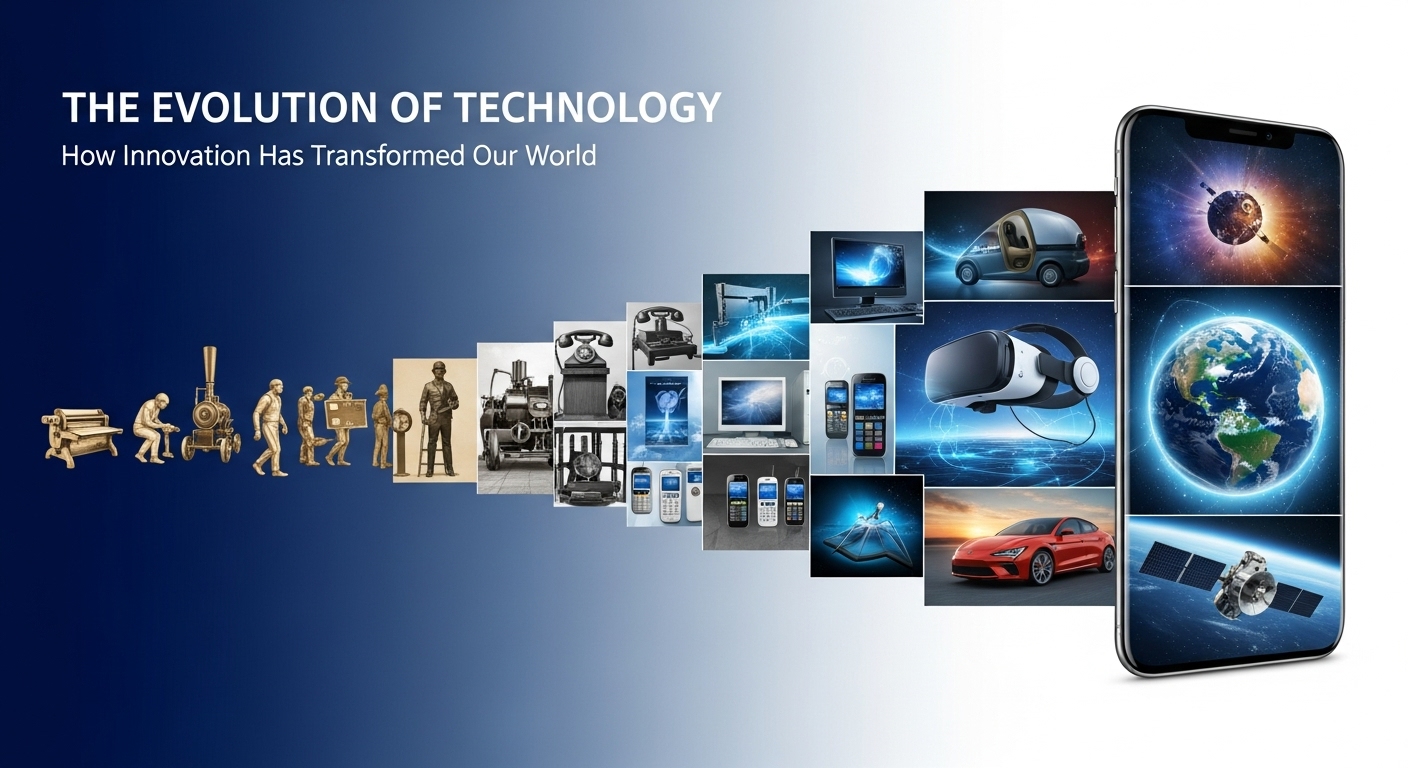
Technology is the heartbeat of modern civilization. From the invention of the wheel to the rise of artificial intelligence, every era has been marked by tools that redefined human potential. Today, we live in a world where digital transformation drives economies, changes cultures, and reshapes identities. The evolution of technology is not just about faster devices or smarter software—it’s about how humanity continually reimagines what’s possible.
The story of technology is, in essence, the story of progress. Every invention builds on the lessons of the past while opening doors to new opportunities. As we stand in the 21st century, surrounded by smart machines, renewable energy systems, and vast digital networks, it’s worth exploring how we got here, what we’re building next, and what it all means for the future of our planet and our species.
The Dawn of Digital Civilization
Before smartphones and the internet, technology existed in simpler yet revolutionary forms. The industrial age of the 18th and 19th centuries laid the foundation for modern machinery and mass production. Steam engines, electricity, and telegraphs transformed communication and transportation, shrinking the world and expanding horizons.
The 20th century marked the dawn of the digital era. Computers, once room-sized behemoths, became the engines of progress. The transistor, invented in 1947, replaced bulky vacuum tubes and made electronics smaller, faster, and more reliable. By the 1970s and 80s, personal computers entered homes, and digital technology began weaving itself into the fabric of daily life.
The 1990s saw the rise of the internet—a revolution that connected humanity like never before. What once required days or weeks to communicate could now be done in seconds. Information became a global resource, accessible to anyone with a connection. The web wasn’t just a tool—it became a new world.
The Rise of the Information Age
By the early 2000s, the Information Age had fully taken hold. Data became the new oil, and the ability to process, analyze, and interpret that data became a defining skill. Businesses began transitioning from analog systems to digital infrastructures. Emails replaced letters, search engines replaced encyclopedias, and social media platforms redefined human interaction.
The emergence of smartphones turned this shift into a daily habit. No longer confined to desktops or offices, technology became personal and mobile. A device in your pocket could perform tasks once reserved for supercomputers. Communication, entertainment, navigation, education—all converged into a single handheld portal.
The Information Age also democratized creativity. Anyone could publish a book, make a film, share music, or build an audience. Barriers to entry collapsed as technology empowered individuals to become their own broadcasters, publishers, and innovators.
The Internet Revolution: Connecting the Planet
Few technologies have shaped human society as profoundly as the internet. What began as a military communication project evolved into a digital ecosystem hosting billions of users. It redefined commerce, education, politics, and relationships.
The internet’s impact lies in its universality. It doesn’t recognize borders, languages, or hierarchies. A student in a remote village can access the same knowledge as a scholar in a major city. A small business can reach global customers without a physical storefront. Social movements can rise from a single post and change the course of history.
However, this connectivity also brings challenges. The same networks that unite us can divide us. Misinformation spreads as easily as truth. Privacy erodes as data becomes currency. The challenge of the internet age is not just access—but awareness. How we use technology defines whether it uplifts or undermines us.
The Mobile Era: Technology in Every Pocket
When the first iPhone was unveiled in 2007, few could have predicted the cultural and technological shift it would trigger. Smartphones became more than communication tools—they became digital extensions of ourselves. Today, billions of people rely on their phones for everything from banking to fitness tracking, from work meetings to entertainment.
Mobile technology reshaped industries. Traditional media struggled as streaming platforms and mobile apps captured global audiences. E-commerce thrived as shopping became a few taps away. Transportation, education, and even healthcare began adapting to the mobile-first mindset.
Yet, the mobile revolution also raised new questions about dependency and balance. Notifications compete for our attention, blurring the line between connection and distraction. The challenge for the future is finding equilibrium—leveraging mobile power without letting it dominate our lives.
Artificial Intelligence: The Mind of the Machine
Perhaps no technology captures both excitement and fear like artificial intelligence. Once a speculative dream of science fiction, AI is now a reality woven into our daily existence. From virtual assistants to recommendation algorithms, AI silently powers much of the modern world.
AI’s strength lies in its ability to learn. Machine learning algorithms process vast amounts of data, identify patterns, and make predictions—sometimes more accurately than humans. In healthcare, AI assists in diagnosing diseases. In finance, it detects fraud. In transportation, it enables autonomous vehicles. The possibilities seem endless.
However, with great potential comes profound responsibility. AI raises ethical questions about bias, surveillance, and employment. As machines become smarter, we must ensure they remain aligned with human values. The future of AI will not be defined by technology alone, but by how wisely we choose to wield it.
The Era of Automation and Robotics
Automation is not new, but its scale and sophistication today are unprecedented. Robots now perform surgeries, manufacture products, deliver packages, and even explore distant planets. Automation increases efficiency and reduces human error—but it also disrupts traditional labor markets.
Factories once filled with workers are now operated by machines. Self-checkout counters replace cashiers. Algorithms replace analysts. This transition forces societies to reconsider the meaning of work. What happens when machines can do almost everything better and faster?
The answer may lie in adaptation rather than resistance. As repetitive tasks are automated, human creativity, empathy, and critical thinking become invaluable. Education systems must evolve to prepare people not just to use technology, but to innovate alongside it.
The Power of Data: The Invisible Engine
Behind every app, search query, or purchase lies data. The digital age runs on information—collected, analyzed, and monetized at staggering scales. Data tells businesses what customers want before they ask. It helps governments plan infrastructure, scientists model climate change, and doctors predict outbreaks.
But data’s power cuts both ways. While it enables personalization and efficiency, it also threatens privacy and autonomy. The collection of personal data often occurs without full consent or understanding. The rise of “surveillance capitalism” has sparked global debates on how data should be collected, stored, and used.
In the coming years, data ethics will shape policy, technology design, and even democracy itself. The challenge is ensuring that data serves people, not the other way around.
Cloud Computing: The Backbone of Modern Technology
Cloud computing transformed how we store, access, and process information. Instead of relying on local hardware, individuals and organizations can now use remote servers to handle vast workloads. This shift democratized computing power, allowing startups and small businesses to compete with global giants.
The cloud supports everything from streaming services to artificial intelligence models. It enables remote work, global collaboration, and scalable innovation. As hybrid work environments become the norm, cloud infrastructure has become as essential as electricity.
Yet, dependence on the cloud also introduces vulnerabilities. Data breaches, outages, and cyberattacks can cripple entire systems. Building secure, resilient cloud ecosystems is vital to sustaining the digital world.
The Internet of Things: A Connected World
Imagine a world where your refrigerator orders groceries, your car schedules maintenance, and your watch monitors your health in real time. This is the Internet of Things (IoT)—a vast network of interconnected devices sharing data to make life more convenient and efficient.
IoT is transforming industries such as agriculture, healthcare, logistics, and smart cities. Sensors monitor soil conditions for farmers, wearable devices track patient health, and smart grids optimize energy use.
However, with billions of devices online, cybersecurity becomes critical. Every connected object is a potential entry point for hackers. Ensuring privacy and safety in an interconnected world will define the next phase of digital evolution.
Green Technology: Building a Sustainable Future
As the planet faces climate change, technology plays a crucial role in finding solutions. Green technology—also known as clean tech—focuses on reducing environmental impact through innovation. Renewable energy, electric vehicles, sustainable agriculture, and waste reduction systems all rely on technological progress.
Solar and wind power are now cheaper and more efficient than ever. Battery storage technology continues to improve, making renewable energy more reliable. Smart grids balance energy demand and supply dynamically, minimizing waste. The shift toward sustainability is not just an environmental imperative—it’s an economic opportunity.
Future generations will judge us not by how advanced our devices were, but by how responsibly we used them. Technology must serve both progress and preservation.
Virtual and Augmented Reality: Expanding Human Experience
Virtual reality (VR) and augmented reality (AR) represent the frontier of human experience. VR immerses users in digital worlds, while AR enhances the real world with digital overlays. Both technologies are redefining entertainment, education, and industry.
In gaming, VR creates lifelike simulations. In education, students can explore historical sites or perform virtual dissections. In medicine, AR assists surgeons by overlaying digital guidance during operations. The blending of physical and virtual spaces opens creative and practical possibilities once unimaginable.
The challenge is ensuring accessibility. As VR and AR advance, affordability and usability must follow. Otherwise, the gap between those with access to immersive technologies and those without will widen.
Quantum Computing: The Next Great Leap
If classical computing changed the world, quantum computing could redefine it entirely. Based on quantum mechanics, this technology processes information in fundamentally new ways, using qubits instead of bits. While still in its infancy, quantum computing promises exponential power for solving complex problems.
Quantum computers could revolutionize fields like cryptography, medicine, logistics, and climate modeling. Problems that would take classical computers millennia to solve could be completed in minutes.
However, quantum power comes with new risks. Current encryption systems could become obsolete overnight, demanding new standards of cybersecurity. Balancing quantum progress with ethical safeguards will be one of the defining challenges of the next era.
Cybersecurity: The Digital Shield
As technology grows more integrated into our lives, cybersecurity becomes essential. Every connection creates both opportunity and vulnerability. From personal devices to national infrastructure, digital security defines the trust we place in technology.
Cyberattacks have evolved from simple viruses to complex ransomware operations and state-sponsored espionage. Protecting sensitive information requires not only advanced encryption and software but also public awareness and digital literacy.
Cybersecurity is not just a technical issue—it’s a human one. The weakest point in any system is often the user. As we continue to build a hyperconnected world, teaching safe digital practices is as important as building strong firewalls.
The Social Impact of Technology
Beyond gadgets and algorithms, technology shapes how we think, interact, and feel. Social media connects billions yet often isolates individuals. Instant information empowers but can overwhelm. The constant flow of data challenges our ability to focus and reflect.
Technology influences politics, culture, and even identity. Online movements give voice to the voiceless, while misinformation distorts truth. The digital divide still separates those who benefit from innovation from those who do not.
Society must learn to coexist with its creations. We need digital ethics, mindfulness, and empathy as much as we need new apps and devices. The future of technology is inseparable from the future of humanity.
The Future of Technology: Humanity at the Crossroads
The future will not be defined by a single invention, but by the integration of many. Artificial intelligence, biotechnology, quantum computing, and sustainable energy will converge to create a world that blurs the lines between physical and digital, human and machine.
In the next decades, we may see human brains connected directly to computers, personalized medicine tailored to genetic codes, and cities run by self-regulating systems. Space technology may expand humanity’s presence beyond Earth. The boundaries of imagination will continue to expand.
But with every breakthrough comes responsibility. The future of technology depends not just on engineers and scientists but on everyone who uses, governs, and shapes it. Innovation without ethics leads to chaos; progress guided by purpose leads to prosperity.
Conclusion: The Human Heart of Technology
Technology is neither good nor bad—it is a reflection of those who create and use it. It amplifies our strengths and weaknesses alike. The same internet that spreads knowledge can spread hate; the same AI that saves lives can take jobs. The real question is not what technology can do, but what we choose to do with it.
As we move forward, one truth remains constant: technology is a tool, not a destiny. Its true power lies not in circuits or code, but in human imagination. If guided by wisdom, empathy, and foresight, technology can build a future where progress and humanity coexist in harmony.
The story of technology is far from over. It is being written every day—by the innovators who invent, the thinkers who question, and the dreamers who dare to imagine a better world.
About the Author