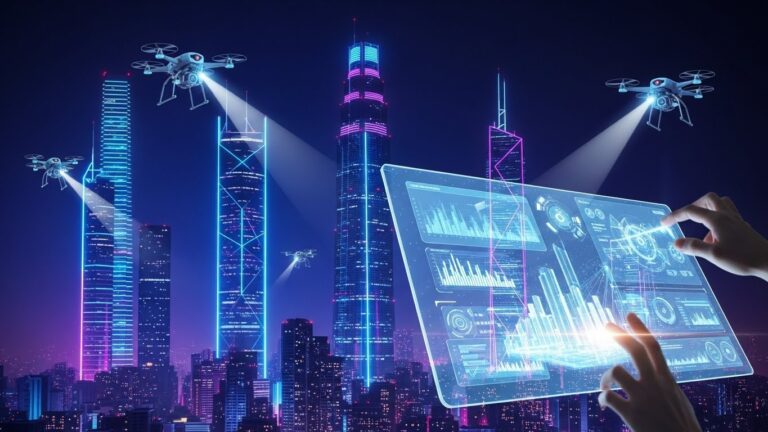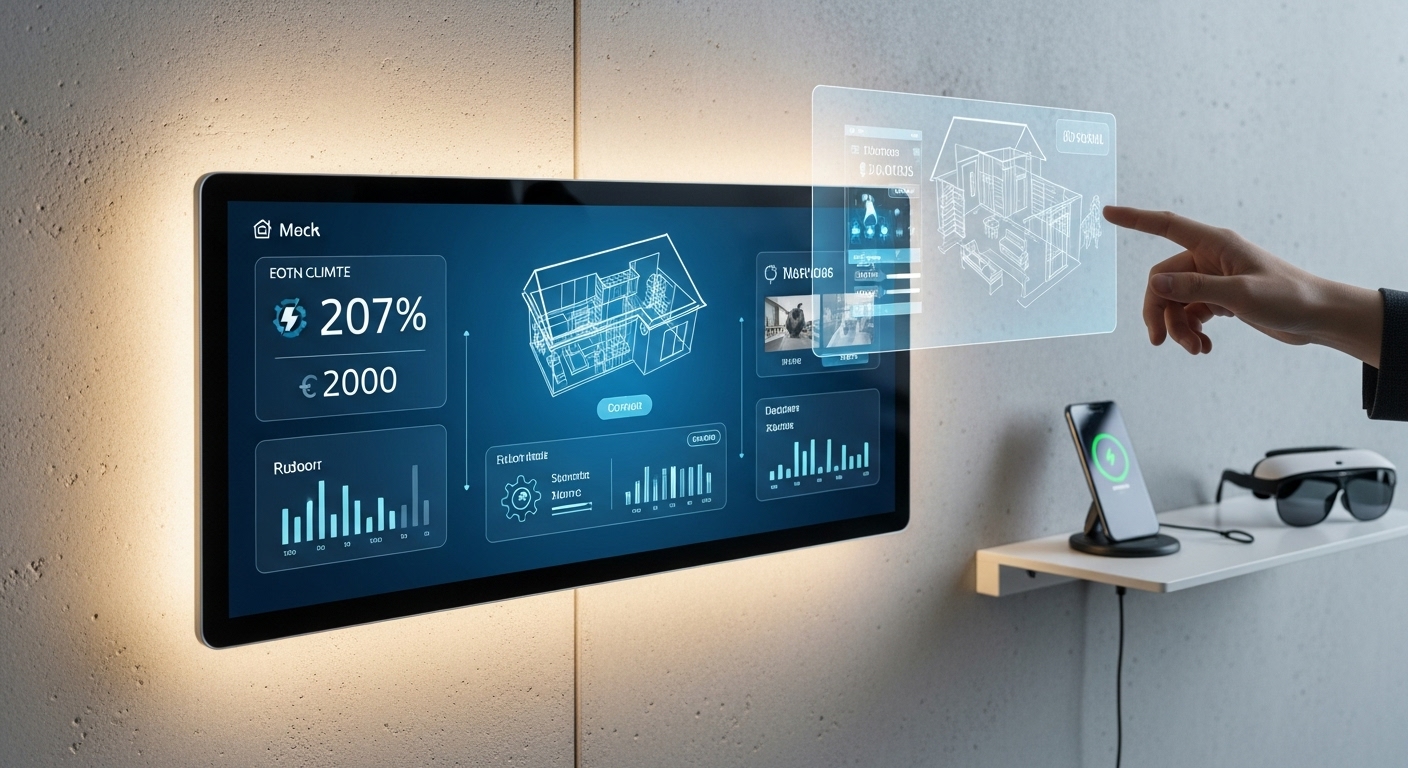
Technology has always been the backbone of human progress. From early inventions like the wheel and the printing press to modern marvels such as the internet and smartphones, technological advancements have continuously redefined how we live, work, and interact. Today, we are entering an era where innovation is accelerating at an unprecedented pace. Artificial intelligence, quantum computing, the Internet of Things, virtual and augmented reality, robotics, and renewable energy are transforming our world in ways that were once considered science fiction. This blog explores the most significant technological trends of today and how they are reshaping the future.
Artificial Intelligence: Transforming Industries and Lives
Artificial Intelligence, or AI, has moved far beyond theoretical research and into practical applications that impact everyday life. AI systems are capable of analyzing massive amounts of data, recognizing patterns, and making decisions faster and more accurately than humans in many areas.
In healthcare, AI has revolutionized diagnostics and treatment. Machine learning algorithms can interpret medical images with incredible accuracy, often detecting diseases like cancer or heart conditions earlier than traditional methods. AI also assists in drug discovery, simulating molecular interactions to identify promising compounds more quickly than ever before.
In business, AI is transforming operations and customer engagement. Companies now use AI to predict market trends, optimize supply chains, and provide personalized customer experiences. Virtual assistants and chatbots powered by AI offer real-time support, making services more efficient and responsive. As AI technology continues to evolve, its integration into daily life will become even deeper, fundamentally changing the way humans interact with machines.
Quantum Computing: The Next Technological Revolution
Quantum computing represents a revolutionary leap in computing power. Unlike classical computers that rely on binary bits, quantum computers use qubits, which can exist in multiple states simultaneously. This unique property allows quantum systems to perform complex calculations at speeds unattainable by traditional computers.
The potential applications of quantum computing are vast. In medicine, quantum computers can simulate molecular interactions for drug discovery, potentially accelerating treatments for diseases that currently have no cure. In finance, quantum algorithms can optimize portfolios and predict market behavior with greater accuracy. Climate modeling and materials science can also benefit, providing insights that were previously impossible due to computational limits.
Despite its potential, quantum computing faces significant challenges, such as maintaining qubit stability and developing error-correction techniques. Nevertheless, ongoing research and investment suggest that quantum technology will soon redefine the limits of computation and problem-solving across multiple sectors.
The Internet of Things: Creating a Connected World
The Internet of Things (IoT) is transforming ordinary devices into intelligent, interconnected systems. From smart homes to industrial machinery, IoT devices collect and exchange data, enabling automation, efficiency, and smarter decision-making.
In homes, IoT technology enables automation of lighting, heating, security systems, and appliances, improving convenience and energy efficiency. In cities, IoT networks monitor traffic patterns, environmental conditions, and energy usage, helping urban planners optimize infrastructure and improve quality of life.
Industries are also leveraging IoT to enhance productivity. Connected machines provide real-time insights into performance, predict maintenance needs, and minimize downtime. The combination of IoT with artificial intelligence creates autonomous systems capable of making informed decisions without human intervention, resulting in smarter, more efficient operations across multiple sectors.
Virtual Reality and Augmented Reality: Redefining Experiences
Virtual Reality (VR) and Augmented Reality (AR) are transforming how we experience the world. VR immerses users in entirely digital environments, while AR overlays digital information onto the real world. These technologies are no longer limited to gaming; they are influencing education, healthcare, and business.
In education, VR allows students to explore historical sites, conduct virtual science experiments, and engage with complex subjects in immersive ways. AR provides interactive overlays that help students visualize abstract concepts, making learning more engaging and effective.
Healthcare applications of VR and AR are equally impressive. Surgeons use VR to simulate procedures, reducing risks during real operations. AR can provide real-time guidance during surgeries, overlaying critical information directly into the surgeon’s field of view.
Businesses use VR and AR to enhance customer experiences and employee training. Virtual product demonstrations and interactive experiences help companies engage customers more effectively. As VR and AR continue to evolve, they will increasingly blur the boundaries between physical and digital reality, transforming how humans interact with technology and the environment around them.
Renewable Energy and Sustainable Technology
As technology advances, so does the potential to create a sustainable future. Renewable energy solutions, including solar, wind, and hydroelectric power, are becoming more efficient and accessible, reducing dependence on fossil fuels and helping combat climate change.
Solar panels have become more affordable and effective, making them viable for both residential and commercial applications. Wind turbines are evolving to generate more power with minimal environmental impact. Energy storage technologies, such as advanced lithium-ion and solid-state batteries, are helping address the intermittency of renewable energy, ensuring a reliable and steady supply.
Transportation is also being transformed by sustainable technologies. Electric vehicles are becoming more widespread, supported by improved batteries and charging infrastructure. Autonomous electric vehicles are emerging, promising to reduce traffic congestion, lower emissions, and improve road safety. By integrating renewable energy into both daily life and industrial applications, technology is enabling a greener and more sustainable future.
Robotics and Automation: Shaping the Workforce
Robotics and automation are transforming industries by performing repetitive, precise, and complex tasks with efficiency and accuracy. From manufacturing to logistics and service industries, robots are enhancing productivity while reducing human error.
In factories, robotic arms assemble products with remarkable precision. Automated warehouses streamline inventory management and order fulfillment, increasing efficiency and reducing costs. Service industries are adopting robots for tasks such as deliveries, customer support, and administrative work, freeing humans to focus on creativity, strategy, and problem-solving.
However, automation also raises concerns about workforce displacement. Preparing for the future of work requires focusing on skills such as critical thinking, problem-solving, and technical proficiency that complement automated systems. Emphasizing lifelong learning and adaptability will ensure that humans can thrive alongside intelligent machines.
Cybersecurity: Protecting the Digital Realm
As technology becomes deeply embedded in every aspect of life, cybersecurity is more important than ever. Cyber threats are growing in sophistication, targeting individuals, businesses, and critical infrastructure. Protecting data and digital assets is essential for maintaining trust in an increasingly connected world.
Artificial intelligence is both a tool and a challenge in cybersecurity. AI-driven tools can detect and respond to cyber threats in real-time, but hackers also use AI to develop increasingly sophisticated attacks. Proactive cybersecurity strategies, including monitoring, encryption, and secure software development, are crucial to staying ahead of evolving threats.
The growing reliance on IoT devices, cloud computing, and remote work underscores the importance of comprehensive security measures. A strong cybersecurity framework is foundational for the continued growth and reliability of technology in all sectors.
Ethical Considerations in Technological Advancement
Rapid technological innovation raises critical ethical questions. Artificial intelligence can unintentionally perpetuate biases, automation may displace workers, and emerging technologies like quantum computing could challenge existing security systems.
Addressing these challenges requires a commitment to responsible innovation. Policymakers, technologists, and society must work together to ensure that new technologies benefit humanity. Principles such as transparency, accountability, and inclusivity should guide the development and implementation of emerging technologies. Ethical considerations are essential to building public trust and ensuring that technological progress serves society positively.
The Future of Technology and Human Potential
The technologies of today and tomorrow offer extraordinary possibilities. Artificial intelligence, quantum computing, IoT, immersive realities, robotics, renewable energy, and cybersecurity are redefining what is possible across industries and daily life. These innovations have the potential to improve healthcare, education, environmental sustainability, and overall quality of life.
However, technological progress must be accompanied by ethical responsibility and thoughtful consideration of societal impact. By embracing innovation responsibly and inclusively, humanity can harness the full potential of technology to create a future that is advanced, sustainable, and equitable.
Technology is no longer just a tool; it is a partner in human progress. The choices we make today will define the world of tomorrow. By understanding, adapting to, and shaping technological advancements, humanity can create a future that goes beyond imagination, where innovation and human potential coexist in harmony.
About the Author