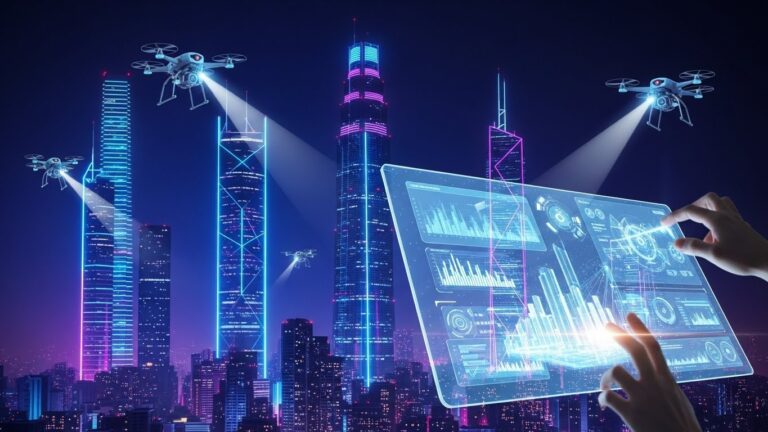
As we look toward the future, it’s hard not to marvel at the rapid advancements in technology. From AI-powered machines that can now mimic human cognition, to advancements in quantum computing and robotics, the landscape of technology is evolving at a pace faster than we could have imagined a few decades ago. But beyond the buzzwords and headlines, how exactly is technology shaping our world? Let’s explore the exciting innovations that are setting the stage for a new era.
The Rise of Artificial Intelligence: A New Frontier
Artificial Intelligence (AI) has moved from being a niche area of study to a cornerstone of technological development. Today, AI plays an integral role in numerous industries, from healthcare to finance, education, and even creative fields like art and music. AI algorithms are becoming more sophisticated, enabling machines to process vast amounts of data and make decisions in real time. With deep learning and neural networks, AI is now capable of performing tasks that once required human expertise, such as diagnosing diseases or predicting market trends.
In the future, AI will continue to revolutionize industries by automating routine tasks, allowing humans to focus on more complex and creative endeavors. The potential for AI to solve some of humanity’s greatest challenges—like climate change, disease eradication, and poverty—is a thrilling prospect.
Quantum Computing: The Next Big Leap
Quantum computing is one of the most intriguing frontiers in tech today. Unlike traditional computers that rely on binary systems (0s and 1s), quantum computers leverage quantum bits, or qubits, which can represent and process information in multiple states simultaneously. This ability exponentially increases their processing power, allowing them to solve complex problems that are currently beyond the capabilities of classical computers.
Though still in its early stages, quantum computing has the potential to transform industries ranging from cryptography to material science. For example, it could revolutionize drug discovery by simulating molecular structures more accurately, speeding up the process of finding life-saving medications. While it may take years before quantum computers become mainstream, researchers are optimistic about the breakthroughs they will bring.
The Internet of Things (IoT): Connecting Everything
The Internet of Things (IoT) is transforming how we live, work, and interact with the world around us. By embedding sensors and smart devices into everyday objects, IoT enables seamless communication between the digital and physical worlds. From smart homes with devices that monitor energy consumption to wearable health trackers that collect data on our physical well-being, IoT is making our lives more connected and efficient.
In the future, IoT will continue to expand, bringing about smart cities where everything from traffic lights to waste management systems is interconnected. The ability to gather and analyze data in real-time will enable cities to run more efficiently, reduce waste, and improve quality of life for residents.
Robotics: Redefining Work and Automation
The field of robotics has made significant strides over the past few years. Robots are no longer limited to performing simple, repetitive tasks in factories—they are now capable of performing complex surgeries, assisting in elderly care, and even exploring the depths of space. With advancements in machine learning and artificial intelligence, robots are becoming more adaptable and capable of learning from their environments.
As robotics continues to evolve, we can expect to see more automation in industries like manufacturing, logistics, and agriculture. This will lead to increased efficiency and reduced costs, but it also raises questions about the future of work and the impact on jobs. While some jobs may be replaced by automation, new opportunities will arise for individuals to work alongside robots, designing, programming, and maintaining these advanced systems.
Blockchain Technology: Securing the Future
Blockchain technology, the backbone of cryptocurrencies like Bitcoin, is proving to be more than just a tool for digital currencies. Its decentralized nature makes it an attractive solution for securing data, verifying transactions, and ensuring transparency across various industries. From supply chain management to voting systems and healthcare, blockchain can provide an immutable, transparent ledger that ensures trust and accountability.
In the coming years, we’ll likely see an increase in blockchain applications, particularly in sectors that require high levels of security and transparency. By eliminating the need for intermediaries, blockchain technology has the potential to reduce fraud, streamline processes, and lower costs for businesses and consumers alike.
The Role of 5G: A Catalyst for Change
The rollout of 5G networks promises to be a game-changer for technology. With its faster speeds, lower latency, and greater capacity, 5G will enable a new wave of innovations that were previously unthinkable. From autonomous vehicles that rely on real-time data to immersive augmented and virtual reality experiences, 5G will empower technologies that require near-instantaneous data transmission.
As 5G networks expand, the possibilities for innovation will become limitless. It will also help bridge the digital divide, providing faster internet access to rural and underserved areas, helping to level the playing field for education, business, and communication.
Ethical Considerations: Navigating the Future Responsibly
While technological advancements offer tremendous benefits, they also raise important ethical questions. Issues like data privacy, cybersecurity, AI bias, and the potential for job displacement must be addressed as we continue to push the boundaries of innovation. It’s essential for governments, businesses, and individuals to work together to ensure that technology serves the greater good and is used responsibly.
One area of concern is the increasing surveillance enabled by advanced technologies. As facial recognition software and AI-powered surveillance cameras become more common, it’s important to balance security with personal freedoms. Similarly, as AI becomes more integrated into decision-making processes, ensuring fairness and transparency in algorithms will be key to preventing discrimination and bias.
Conclusion: The Boundless Potential Ahead
As we look to the future, it’s clear that technology will continue to be a driving force in shaping our world. From artificial intelligence to blockchain, quantum computing, and robotics, the innovations of today are laying the groundwork for a future we can barely imagine. While challenges remain—particularly in terms of ethics, security, and the impact on jobs—the potential for technology to improve lives and solve global problems is boundless.
The future is not just about technology—it’s about how we choose to use it to create a better, more connected world. The next decade promises to be an exciting one, full of possibilities, as we embrace the transformative power of tech to build a brighter tomorrow.
About the Author