Technology has always been a powerful force, shaping the way we live, work, and interact with the world around us. From the earliest inventions to today’s cutting-edge innovations, technological progress has continuously transformed our societies. As we stand at the crossroads of the next technological revolution, it’s clear that the future will be defined by advancements that challenge the status quo and open up new possibilities. In this blog, we’ll explore the most significant technological trends reshaping our world today and their potential impact on tomorrow.
The Rise of Artificial Intelligence and Machine Learning
Artificial Intelligence (AI) and Machine Learning (ML) are no longer just buzzwords—they are transformative technologies that are changing the way industries operate. These technologies are enabling machines to perform tasks that previously required human intelligence, from data analysis to decision-making processes. In 2025, AI will be even more integrated into everyday life, enhancing automation and driving efficiencies across sectors like healthcare, finance, education, and retail.
In healthcare, AI algorithms are being used to analyze medical data, predict diseases, and personalize treatments. This revolution will not only save lives but also reduce healthcare costs. In finance, AI is already being used for predictive analytics, fraud detection, and investment management, optimizing both service delivery and risk management.
Machine learning, a subset of AI, empowers systems to learn from experience and improve over time. This feature is especially prominent in industries like self-driving cars, where algorithms continuously learn from the data collected by sensors and cameras to navigate traffic safely.
The Power of Quantum Computing
Quantum computing represents the next frontier in computational power. While classical computers process information as binary data (0s and 1s), quantum computers use quantum bits or qubits, which can represent multiple states simultaneously. This capability promises to revolutionize fields such as cryptography, drug discovery, and artificial intelligence by solving complex problems much faster than today’s supercomputers.
One of the most exciting prospects of quantum computing is its potential to break current encryption algorithms. While this poses a threat to current security systems, it also opens the door to new encryption methods, which will be far more secure. In industries like pharmaceuticals, quantum computing will help simulate molecular interactions, accelerating drug discovery and the development of personalized treatments.
Although quantum computing is still in its infancy, progress is happening rapidly. In the next decade, we can expect to see quantum computers solving problems that were previously unimaginable with classical systems.
The Internet of Things (IoT) and Smart Cities
The Internet of Things (IoT) refers to the growing network of physical objects embedded with sensors and connected to the internet, allowing them to communicate with one another. From smart home devices to industrial applications, IoT is creating a more connected world. By 2025, it is projected that there will be more than 75 billion connected devices globally, enabling a new era of convenience, efficiency, and data-driven decision-making.
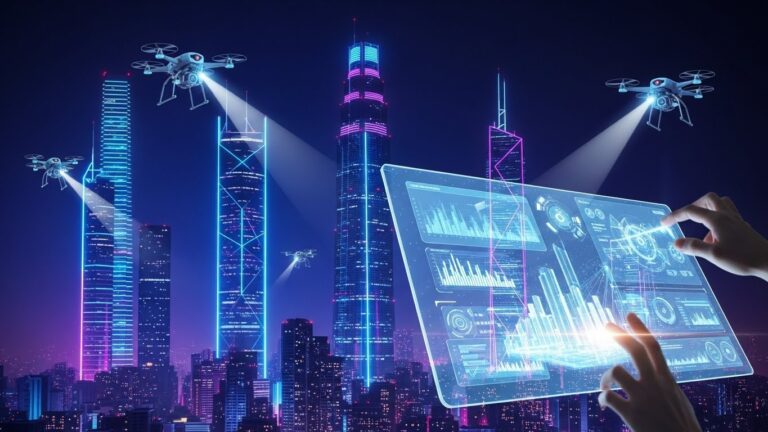
In smart cities, IoT technology is already being used to optimize traffic management, reduce energy consumption, and enhance public safety. Sensors embedded in roads and vehicles can monitor traffic patterns, adjusting traffic lights in real-time to reduce congestion and emissions. Additionally, IoT-enabled systems in buildings can automatically adjust lighting, heating, and cooling to maximize energy efficiency, lowering carbon footprints.
IoT also plays a critical role in supply chain management by providing real-time tracking of goods and inventory. This allows businesses to improve operational efficiency, reduce waste, and deliver products to consumers faster. The widespread adoption of IoT will continue to transform how we interact with the physical world, making it smarter and more responsive.
Blockchain and the Future of Secure Transactions
Blockchain technology has gained significant attention in recent years, particularly due to the rise of cryptocurrencies like Bitcoin. However, the potential applications of blockchain go far beyond digital currencies. At its core, blockchain is a decentralized, distributed ledger system that records transactions in a secure, transparent, and immutable way.
In industries like finance, blockchain is already being used to streamline cross-border payments and reduce the cost and time associated with traditional banking systems. By eliminating intermediaries, blockchain enables faster and more secure transactions. Additionally, blockchain is revolutionizing supply chain management, ensuring the traceability and authenticity of goods as they move through global networks.
One of the most promising applications of blockchain is in the field of digital identity. With growing concerns about privacy and data security, blockchain can provide individuals with more control over their personal information. By using blockchain to store and manage digital identities, individuals can securely share data without relying on third-party organizations to maintain their privacy.
Virtual Reality and Augmented Reality: Changing How We Experience the World
Virtual Reality (VR) and Augmented Reality (AR) are two of the most exciting immersive technologies that have the potential to change the way we work, play, and interact with the world. While VR immerses users in a completely digital environment, AR overlays digital information onto the real world, enhancing the way we perceive our surroundings.
In the gaming industry, VR has already created entirely new worlds for players to explore, offering a level of immersion that was previously unimaginable. AR, on the other hand, is transforming mobile gaming experiences, such as the globally popular game Pokémon GO, which blends the real world with digital characters.
Beyond entertainment, VR and AR are revolutionizing industries like healthcare, education, and retail. In healthcare, VR is being used for surgical training, allowing doctors to practice complex procedures in a risk-free environment. AR, meanwhile, is helping doctors visualize patient data in real-time, improving decision-making during medical procedures.
In education, VR can transport students to historical sites or provide hands-on experiences in subjects like biology, chemistry, or engineering. AR is also being used to enhance classroom learning by providing interactive, immersive lessons.
The Role of 5G and the Connectivity Revolution
5G, the fifth generation of mobile network technology, is set to revolutionize connectivity, offering significantly faster download speeds, lower latency, and more reliable connections compared to 4G. While 5G has already begun rolling out in many regions, its full potential will be realized in the coming years.
One of the key benefits of 5G is its ability to support a massive number of connected devices simultaneously. This will be critical as we continue to see the growth of the Internet of Things (IoT), where billions of devices will need to communicate with one another in real-time. With 5G, industries like healthcare, autonomous vehicles, and smart cities will benefit from faster, more reliable connections that can handle the demands of next-generation technologies.
In addition to enhancing IoT applications, 5G will also enable innovations like augmented reality, virtual reality, and remote surgery. With low latency, users will be able to experience AR and VR without lag, creating more immersive experiences. The ability to perform surgeries remotely with minimal delay could also revolutionize healthcare delivery, particularly in underserved regions.
The Future of Work: Automation and Remote Collaboration
The workplace is undergoing a profound transformation, driven by advancements in automation, AI, and remote collaboration technologies. Automation is already reshaping industries like manufacturing, logistics, and customer service, where repetitive tasks are being performed by machines instead of humans.
In the future, automation will continue to displace routine jobs, but it will also create new opportunities in fields like data science, robotics, and AI development. Workers will need to adapt by acquiring new skills, particularly in technology and innovation, to stay relevant in the job market.
Remote work is another trend accelerated by technology. Tools like Zoom, Slack, and Microsoft Teams have enabled millions of people to work from home during the COVID-19 pandemic, and this shift will likely continue even after the pandemic ends. With cloud computing and collaboration tools, teams can work from anywhere in the world, enabling a more flexible, global workforce.
In the future, workplaces will be more decentralized, with virtual collaboration platforms and AI assistants helping teams work more efficiently. Automation will handle administrative tasks, allowing employees to focus on more strategic and creative work.
Conclusion: A Brave New Technological World
As we look to the future, it’s clear that technology will continue to evolve at a rapid pace, reshaping the way we live and interact with the world. From artificial intelligence and quantum computing to smart cities and immersive technologies, the next decade will be defined by innovations that were once thought to be science fiction.
While these advancements hold immense potential, they also come with challenges and ethical considerations. The responsible development and deployment of these technologies will be crucial to ensuring that they benefit humanity as a whole.
Ultimately, the future of technology is not just about what machines can do—it’s about how we, as individuals and societies, use technology to improve our lives. By embracing these innovations and thinking critically about their impact, we can create a future that is both technologically advanced and human-centered.
About the Author