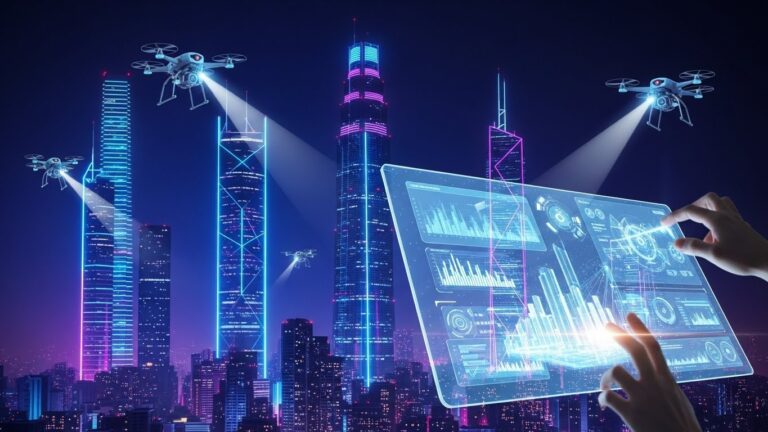
In the past few decades, the rapid advancement of technology has transformed nearly every aspect of human life. From how we communicate and work to how we learn, entertain ourselves, and even manage our health, technology has integrated into our daily routines in ways that were once unimaginable. With each passing year, innovation continues to accelerate, and new technologies emerge, reshaping industries, societies, and even our personal identities.
This blog post will explore how technology is impacting the present and future, from the transformative role of artificial intelligence and automation to the rise of immersive experiences like virtual and augmented reality. It will also examine the challenges and opportunities presented by these advancements and discuss the responsibility we all share in navigating the digital age.
The Rise of Artificial Intelligence: Redefining Human-Machine Interaction
Artificial intelligence (AI) has been one of the most talked-about technologies in recent years, and for good reason. AI is changing the way we work, live, and interact with the world. At its core, AI refers to machines that can simulate human intelligence, performing tasks that typically require human cognition—like understanding language, recognizing patterns, and making decisions. From voice assistants like Siri and Alexa to self-driving cars and predictive algorithms, AI is present in almost every facet of modern life.
One of the most significant applications of AI is in the workforce. Automation powered by AI is streamlining processes, increasing efficiency, and reducing human error across a variety of sectors. In manufacturing, robots can assemble products with precision and speed far beyond human capabilities. In healthcare, AI is helping doctors diagnose diseases by analyzing medical images, reading patient records, and even predicting health outcomes. AI’s potential in healthcare is particularly exciting because it could lead to earlier detection of illnesses and more personalized treatment plans.
While AI offers many benefits, it also presents challenges. As machines become smarter and more autonomous, concerns arise about job displacement. Many fear that AI and automation could replace human workers in industries like customer service, transportation, and manufacturing. While technology has historically created new job categories, the rapid pace of AI adoption may outpace the creation of new roles, leaving workers in vulnerable positions. Moreover, questions about the ethics of AI, such as bias in algorithms or the potential for surveillance, must be addressed to ensure that AI is used responsibly.
The Internet of Things: A Connected World
The Internet of Things (IoT) refers to the growing network of devices, sensors, and objects connected to the internet. From smart thermostats and refrigerators to wearable fitness trackers and security cameras, IoT devices are becoming increasingly prevalent in homes, businesses, and cities around the world.
In the home, IoT has transformed the way we interact with our living spaces. Smart home devices allow people to control everything from lighting and heating to entertainment systems with their smartphones or voice commands. In addition, IoT-powered appliances are more energy-efficient, automatically adjusting settings based on usage patterns, which can save money and reduce environmental impact.
In cities, IoT is helping create “smart cities” that are more efficient, sustainable, and livable. Sensors placed throughout urban infrastructure can collect data on everything from traffic flow and air quality to energy consumption and waste management. By analyzing this data, city planners can make real-time adjustments, reducing congestion, optimizing public services, and improving residents’ quality of life.
However, as more devices become connected, the risk of security breaches increases. Each new IoT device is another potential entry point for hackers, which could lead to privacy violations or cyberattacks. To mitigate these risks, strong security protocols and safeguards must be built into IoT devices and networks to protect both individuals and larger systems from cyber threats.
Cloud Computing: The Backbone of Modern Innovation
Cloud computing has fundamentally changed how we store and access data. Instead of relying on physical storage devices like hard drives, businesses and individuals can now use cloud services to store information remotely, accessible from anywhere with an internet connection. This shift to the cloud has made data storage, processing, and sharing more efficient, secure, and cost-effective.
For businesses, cloud computing has opened the door to a new level of agility. Cloud-based solutions allow companies to scale their infrastructure quickly, without the need for significant upfront investment in hardware. This has democratized access to advanced tools and technologies, enabling small and medium-sized businesses to compete on a level playing field with larger corporations. Additionally, cloud services provide businesses with more reliable data backup, reducing the risk of data loss due to hardware failures.
Cloud computing has also transformed the way people work. Cloud-based productivity tools like Google Workspace, Microsoft 365, and Slack allow teams to collaborate in real-time, regardless of location. The rise of remote work, accelerated by the COVID-19 pandemic, would not have been possible without cloud computing. It enables employees to access files, attend virtual meetings, and communicate seamlessly from their homes or any other remote location.
However, while the cloud offers convenience and flexibility, it also raises concerns about data privacy. With vast amounts of personal and business data stored remotely, it is critical that cloud providers implement robust security measures to prevent unauthorized access. Furthermore, as more sensitive information is stored in the cloud, it is essential to ensure that these services comply with data protection regulations and provide transparency in how data is used and protected.
5G: A New Era of Connectivity
The rollout of 5G technology promises to revolutionize mobile connectivity. As the fifth generation of wireless technology, 5G offers significantly faster speeds, lower latency, and greater capacity compared to 4G networks. This enhanced connectivity will not only improve everyday mobile experiences, like faster download speeds and seamless streaming, but also enable entirely new applications in industries such as healthcare, transportation, and entertainment.
One of the most exciting possibilities of 5G is its potential to power autonomous vehicles. The low latency and high bandwidth of 5G networks will allow self-driving cars to communicate with each other and their surroundings in real time, reducing the risk of accidents and improving traffic flow. Additionally, 5G will play a crucial role in enabling smart cities by connecting millions of IoT devices, from traffic lights to public transportation systems, and ensuring they can operate efficiently and in sync.
However, the widespread adoption of 5G also raises concerns about its impact on health and the environment. Some studies have suggested that the increased electromagnetic radiation from 5G towers could pose health risks, although research on this subject is ongoing. Furthermore, the infrastructure needed to support 5G networks—such as the installation of thousands of small cell towers—could have environmental and aesthetic impacts on urban landscapes. Addressing these concerns while advancing the technology will be a key challenge as 5G continues to roll out globally.
Virtual and Augmented Reality: Immersive Experiences Redefining Entertainment
Virtual reality (VR) and augmented reality (AR) are two technologies that are rapidly gaining traction, particularly in the entertainment, gaming, and education sectors. While VR immerses users in entirely virtual environments, AR overlays digital information onto the real world. Both technologies are pushing the boundaries of human-computer interaction and opening up new ways of experiencing the world.
In gaming, VR offers an unprecedented level of immersion, allowing players to step inside the game world and interact with it in ways that were once impossible. For example, in VR games like Beat Saber or Half-Life: Alyx, players use motion controllers to physically move and interact with their surroundings. This level of immersion creates a more engaging and interactive experience, setting VR apart from traditional gaming.
AR, on the other hand, is being used to enhance the real world. Popular apps like Pokémon Go use AR to overlay virtual objects on top of real-world environments, allowing users to interact with digital creatures in their physical surroundings. In industries like retail, AR is used to let customers virtually try on clothes or preview how furniture will look in their homes before making a purchase.
Beyond entertainment, VR and AR are also making their way into education and healthcare. Virtual classrooms and simulations can offer students immersive, interactive learning experiences, while VR therapy is being used to treat conditions like PTSD and anxiety by exposing patients to controlled environments where they can confront their fears in a safe setting.
However, while VR and AR technologies offer exciting possibilities, there are challenges to overcome, particularly in terms of accessibility and affordability. High-quality VR headsets and AR devices can be expensive, and not everyone has access to the necessary technology. As these technologies continue to develop, it will be important to make them more accessible and affordable to a wider audience.
The Future of Technology: Opportunities and Challenges
Looking ahead, the future of technology is filled with exciting possibilities. As we continue to advance in fields like artificial intelligence, IoT, cloud computing, and immersive experiences, the potential for innovation seems limitless. From medical breakthroughs powered by AI to fully connected smart cities, technology promises to improve our quality of life in ways we can’t yet fully comprehend.
However, with these advancements come significant challenges. Issues like data privacy, cybersecurity, and job displacement must be addressed as technology continues to evolve. The ethical implications of technologies like AI and biotechnology will require careful consideration, and it is essential that these innovations are used in ways that benefit society as a whole.
Moreover, as technology becomes increasingly integrated into our daily lives, the digital divide remains a critical issue. Ensuring that everyone has access to the benefits of modern technology, regardless of socioeconomic status, is essential for creating an equitable society.
In conclusion, technology is shaping the present and future of our world in profound ways. As we embrace the opportunities it presents, we must also confront the challenges it brings. By approaching the digital revolution thoughtfully and responsibly, we can harness the power of technology to create a better, more connected world for future generations.
About the Author