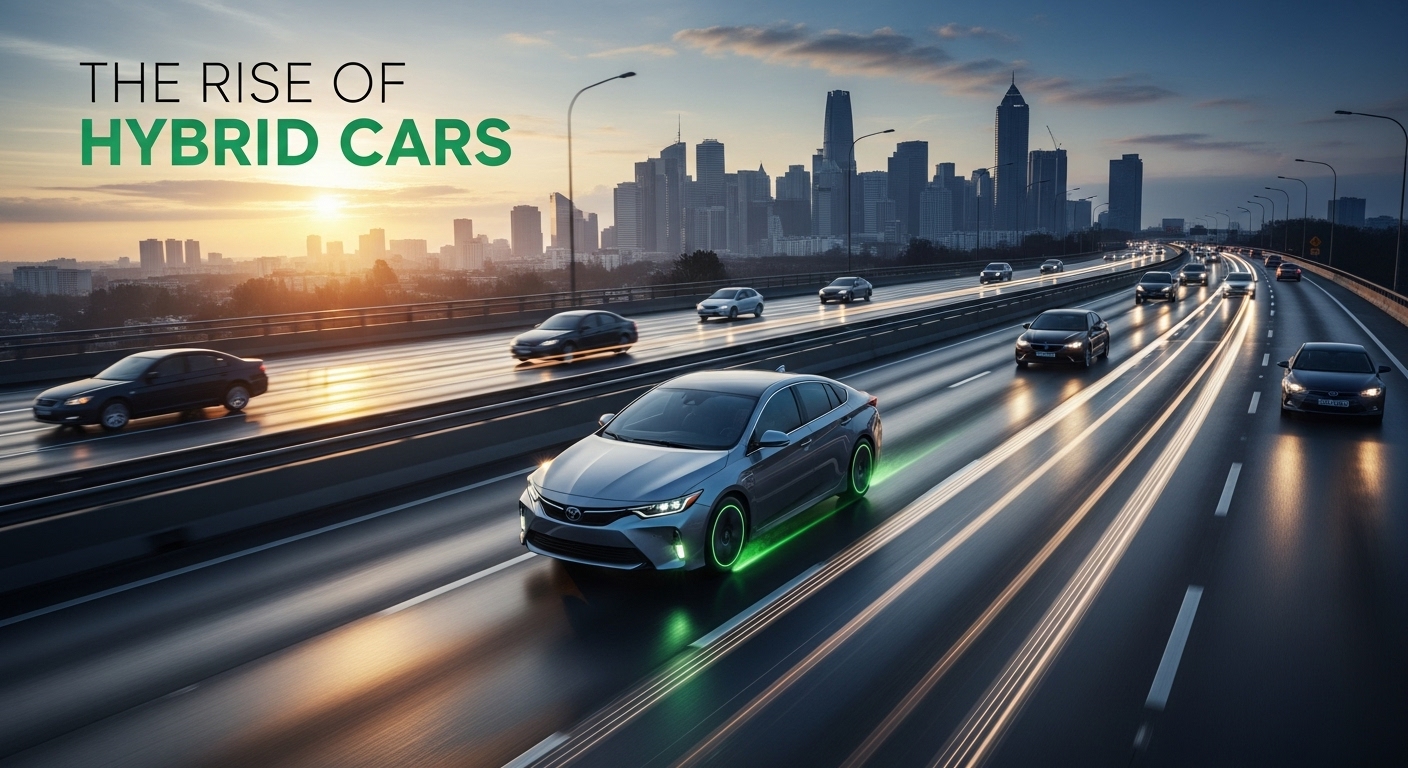
Hybrid cars have transformed from being a niche experiment into one of the most significant developments in the global automotive industry. For decades, gasoline-powered engines dominated roads, and the idea of mixing traditional combustion engines with electric motors seemed futuristic and impractical. Today, hybrid vehicles are not only common but also widely embraced by consumers, policymakers, and manufacturers. They represent a crucial step in the ongoing shift toward sustainable transportation. The rise of hybrid cars is not just a story of engineering innovation but also one of environmental awareness, evolving consumer demand, and global efforts to combat climate change.
Understanding Hybrid Cars
A hybrid car combines two sources of power: a conventional internal combustion engine and an electric motor powered by a battery. Unlike fully electric vehicles, hybrids do not rely exclusively on battery power but instead create a partnership between gasoline and electricity. This collaboration allows for improved fuel efficiency, reduced emissions, and greater flexibility in driving.
There are different types of hybrid systems, but the most common is the parallel hybrid, where both the engine and motor can power the car independently or together. In some cases, the electric motor assists the engine during acceleration, while in others it takes over at lower speeds to save fuel. More advanced plug-in hybrids allow the battery to be charged externally and provide longer all-electric driving ranges before the gasoline engine kicks in.
By blending the reliability of combustion engines with the efficiency of electric motors, hybrids provide a transitional technology for consumers hesitant about going fully electric. They offer reduced environmental impact without requiring drivers to completely give up familiar fuel stations or worry about charging infrastructure.
The Origins of Hybrid Technology
Although hybrid cars became popular in the late 1990s, the concept dates back much further. In the early 20th century, inventors experimented with combining combustion and electric power, but the dominance of cheap gasoline and advancements in traditional engines sidelined these efforts. It was not until rising fuel costs, air pollution, and concerns about resource depletion in the late 20th century that hybrid technology re-emerged as a viable solution.
The real breakthrough came in 1997, when Toyota introduced the Prius in Japan. As the first mass-produced hybrid vehicle, the Prius symbolized the beginning of a new automotive era. Initially met with skepticism, it quickly gained attention for its fuel efficiency and eco-friendly reputation. Other manufacturers soon followed, and by the early 2000s, hybrids were no longer experimental—they were mainstream.
Environmental Awareness and Policy Influence
One of the driving forces behind the rise of hybrid cars has been increasing global awareness of environmental issues. Transportation accounts for a large portion of greenhouse gas emissions, and governments around the world began to set stricter standards on fuel economy and emissions.
Policies such as tax incentives, subsidies, and stricter fuel regulations encouraged both consumers and manufacturers to adopt cleaner technologies. Hybrids, with their ability to significantly reduce fuel consumption and lower tailpipe emissions, became a logical choice. Many cities offered perks such as access to carpool lanes, reduced toll fees, or exemptions from congestion charges for hybrid drivers, further boosting their appeal.
The alignment between environmental responsibility and personal transportation created a market where hybrids could thrive. Consumers increasingly viewed them not only as efficient vehicles but also as statements of environmental consciousness.
Technological Innovations Behind Hybrids
The rise of hybrid cars would not have been possible without rapid technological advancements. Battery technology, in particular, has been central. Early hybrids used nickel-metal hydride batteries, which were reliable but limited in capacity. Over time, lithium-ion batteries emerged, offering greater energy density, lighter weight, and faster charging capabilities.
In addition to batteries, improvements in power electronics allowed for more seamless coordination between the engine and motor. Regenerative braking systems became standard, capturing energy normally lost as heat during braking and using it to recharge the battery. These innovations ensured that hybrids became more efficient, user-friendly, and reliable.
The development of lightweight materials and aerodynamic designs also contributed to hybrid efficiency. By reducing overall vehicle weight and improving airflow, manufacturers maximized the benefits of the dual-power system. Each incremental innovation strengthened the appeal of hybrids, transforming them from early novelties into practical solutions for millions of drivers.
Consumer Adoption and Market Growth
Consumer adoption of hybrid cars grew steadily once people recognized their practical benefits. Initially, hybrids appealed to environmentally conscious buyers willing to experiment with new technology. Over time, as fuel prices fluctuated and the cost of hybrid technology dropped, mainstream drivers embraced them for economic reasons as well.
Hybrids offered a unique value proposition: drivers could save money on fuel without making significant lifestyle changes. They did not need to worry about charging stations or range limitations, which were concerns for early electric vehicles. This made hybrids attractive transitional vehicles for people who wanted to reduce emissions but were not yet ready to fully commit to electric driving.
As manufacturers expanded their hybrid offerings to include sedans, SUVs, and luxury models, consumer choice increased. What was once a niche market dominated by the Prius expanded into a wide spectrum of vehicles catering to diverse needs and preferences. Market growth accelerated further as hybrids gained reputations for reliability, longevity, and lower total cost of ownership.
The Role of Automakers in Promoting Hybrids
Automakers played a crucial role in the rise of hybrid cars by investing heavily in research, marketing, and consumer education. Companies like Toyota, Honda, and Ford positioned hybrids as symbols of innovation and responsibility. Toyota in particular became synonymous with hybrids, as the Prius evolved into a global icon.
Over time, competition intensified as more manufacturers entered the hybrid space. Luxury brands like Lexus and BMW introduced hybrid versions of high-end models, while mainstream automakers integrated hybrid technology into popular vehicles like SUVs and crossovers. This expansion signaled that hybrids were not just eco-friendly alternatives but also desirable, high-performance options.
The automotive industry recognized that hybrids provided a bridge between conventional engines and the fully electric future. By offering hybrids, manufacturers could meet tightening emissions regulations, appeal to environmentally conscious consumers, and prepare themselves for the eventual transition to electric mobility.
Hybrids as a Step Toward Electrification
The rise of hybrid cars is often seen as part of a larger journey toward full electrification. Hybrids serve as transitional technology, familiarizing consumers with electric propulsion while reducing dependence on fossil fuels. They demonstrate the benefits of regenerative braking, battery management, and electric motors, paving the way for greater acceptance of plug-in hybrids and fully electric vehicles.
In this sense, hybrids act as stepping stones in the evolution of transportation. They provide immediate environmental benefits while buying time for charging infrastructure to expand and battery technology to mature. Many drivers who begin with hybrids later transition to plug-in hybrids or full electric cars as they gain confidence in the technology and as options become more widespread.
Challenges Facing Hybrid Cars
Despite their success, hybrid cars also face challenges. As fully electric vehicles become more affordable and practical, hybrids risk being viewed as temporary solutions rather than long-term answers. Critics argue that hybrids still rely on fossil fuels, and while they reduce emissions, they do not eliminate them entirely.
The complexity of hybrid systems can also increase manufacturing costs and maintenance challenges compared to traditional vehicles. Additionally, as governments push for stricter zero-emission goals, hybrids may face reduced incentives or regulatory support in the future. Automakers must therefore balance investment in hybrid technology with the accelerating push toward full electrification.
Global Impact of Hybrid Adoption
The adoption of hybrid cars has had significant global impacts. They have contributed to reducing fuel consumption, cutting carbon emissions, and raising public awareness about sustainable transportation. In countries with high fuel prices or strict environmental policies, hybrids gained particular traction, influencing both urban mobility and long-term energy planning.
On a cultural level, hybrids also reshaped perceptions of what cars could be. The success of the Prius, for example, turned environmental responsibility into a mainstream consumer trend rather than a fringe movement. Hybrid cars proved that drivers did not need to sacrifice comfort, performance, or style to make environmentally conscious choices.
The Future of Hybrid Cars
The future of hybrid cars is intertwined with the broader story of electric mobility. While fully electric vehicles are expected to dominate the long term, hybrids will likely remain important for years to come, especially in regions where charging infrastructure is limited or where consumers remain hesitant about full electrification.
Plug-in hybrids, with their extended electric ranges and flexible fueling options, may play an especially important role in this transition. They combine the best of both worlds, offering meaningful reductions in fuel use while addressing concerns about range anxiety.
In addition, hybrid technology continues to evolve. More efficient batteries, smarter energy management systems, and lightweight vehicle designs will ensure hybrids remain competitive. Even as the world moves toward full electrification, hybrids will continue to bridge the gap, ensuring that the shift is gradual, practical, and inclusive.
Conclusion
The rise of hybrid cars is a testament to human ingenuity, environmental responsibility, and changing consumer values. By combining combustion engines with electric motors, hybrids created a new category of vehicles that improved fuel efficiency, reduced emissions, and redefined what was possible in transportation. They emerged in response to global challenges, gained momentum through technological innovation, and became mainstream through consumer adoption and industry commitment.
While their role in the future may eventually be overshadowed by fully electric vehicles, hybrids remain a vital chapter in the evolution of automotive technology. They represent the moment when society began to take seriously the need for cleaner, more sustainable transportation. The story of hybrid cars is not just about machines but about a global movement toward a healthier planet and a smarter future.
About the Author