Introduction
Space exploration has always been a symbol of human curiosity, ambition, and ingenuity. From the early days of launching satellites into Earth’s orbit to landing humans on the Moon, every step into the cosmos has been powered by technology. Without the advancements in engineering, computing, communication, and robotics, the dream of exploring the stars would have remained just that—a dream. Today, technology does not simply support space exploration; it keeps it alive. Every spacecraft, satellite, rover, and astronaut relies on cutting-edge technology to survive the harsh environment of space, gather knowledge about the universe, and bring humanity closer to understanding its place in the cosmos.
The Harsh Realities of Space
Space is not a friendly environment for humans. Extreme temperatures, radiation, microgravity, and lack of breathable air create conditions that are impossible to survive without technological support. Unlike Earth, where nature provides the essentials of life, space offers no such comfort. This means that for astronauts to work and live beyond our planet, technology must replicate or substitute every basic survival function. From life support systems and protective suits to spacecraft shielding and advanced communications, technology becomes the lifeline that keeps explorers safe. Understanding these challenges highlights why space exploration and technology are inseparable.
Rockets and Launch Technology
The first step of space exploration is escaping Earth’s gravity, and that requires rockets. Rocket technology remains one of the most crucial innovations that keep space exploration alive. The development of multi-stage rockets, reusable launch vehicles, and more efficient engines has made it possible to send heavier payloads into orbit and beyond. Advances in propulsion systems, such as ion drives and planned nuclear propulsion, promise even longer journeys to distant planets. Without the constant innovation in launch technology, the cost and difficulty of space travel would make exploration unsustainable. Rockets are not just transportation; they are the gateways that open space to humanity.
Satellites: The Eyes and Ears in Space
Satellites form the backbone of space exploration. They orbit Earth and other celestial bodies, collecting data, enabling communication, and monitoring the environment. Weather satellites track climate changes, communication satellites connect astronauts with mission control, and scientific satellites study distant galaxies and cosmic phenomena. These orbiting machines rely on advanced technology to operate in the vacuum of space, withstand radiation, and transmit massive amounts of data back to Earth. They keep space missions informed, connected, and capable of achieving their goals. Without satellites, space exploration would be blind and deaf, unable to gather insights from the vast universe.
Spacecraft and Habitats
Exploring space requires more than reaching orbit; it requires staying there. Spacecraft and space habitats are marvels of engineering that make this possible. The International Space Station (ISS) serves as a prime example of how technology sustains life in space for extended periods. Complex systems regulate oxygen, recycle water, manage waste, and maintain comfortable temperatures. Radiation shielding and carefully designed structures protect astronauts from cosmic rays and micrometeoroids. Future missions to the Moon and Mars rely heavily on developing advanced habitats that can sustain human life for months or years. These living environments demonstrate how technology transforms space from an uninhabitable void into a place humans can survive and work.
Life Support Systems
One of the most critical aspects of space exploration is life support. Unlike on Earth, where oxygen, water, and food are abundant, astronauts depend entirely on technology to provide these essentials. Life support systems generate oxygen by filtering carbon dioxide, recycle water from humidity and waste, and ensure that food remains safe for consumption. Advanced systems reduce the need to transport massive supplies, making long-term missions more feasible. Innovations in hydroponics and space farming aim to provide fresh food during deep-space missions, further reducing dependency on resupply missions from Earth. These systems prove that without technological ingenuity, space exploration would not be sustainable.
Spacesuits: Personal Technology for Survival
Spacesuits are essentially personal spacecraft. They protect astronauts from the vacuum of space, extreme temperatures, and radiation while providing mobility to perform tasks outside spacecraft. Modern spacesuits integrate communication systems, oxygen supply, waste management, and cooling mechanisms into a single wearable unit. Every component, from the visor that shields eyes from harmful solar rays to the gloves designed for delicate yet firm grip, showcases the importance of precision engineering. Future spacesuits are being developed to handle longer spacewalks, surface exploration on Mars, and increased flexibility. These wearable technologies embody how tech keeps exploration alive at the most personal level.
Robotics and Rovers
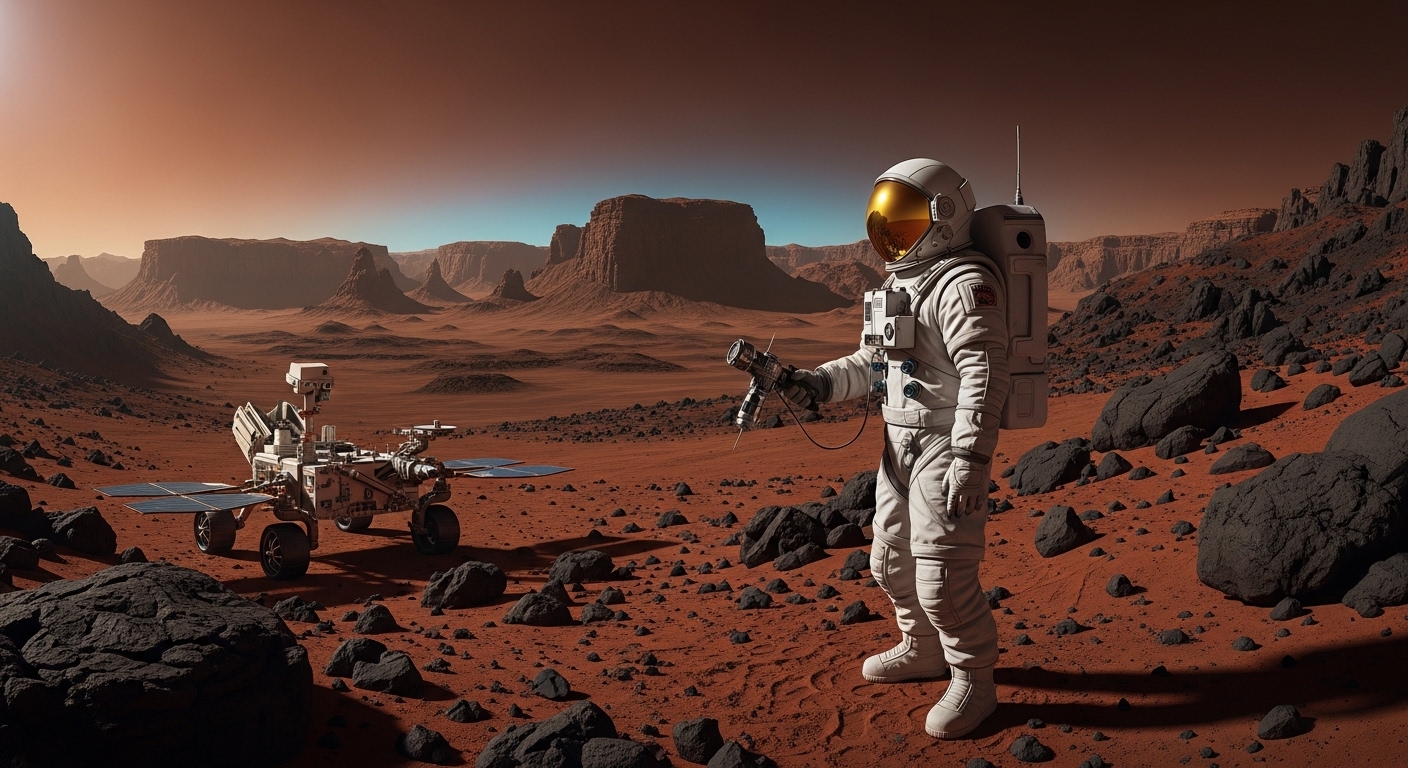
Technology has allowed humanity to extend its reach into places humans cannot yet go. Robotic explorers like rovers and landers have been the pioneers of planetary exploration. Mars rovers such as Spirit, Opportunity, Curiosity, and Perseverance have provided invaluable data about the Red Planet’s atmosphere, surface, and potential for life. These machines are equipped with cameras, drills, sensors, and laboratories, all functioning autonomously or under remote guidance. Robotics extends human presence across the solar system without the risks associated with human missions. They serve as the scouts of space exploration, paving the way for eventual human settlement.
Communications Technology
Space exploration would be impossible without reliable communication. Every command to a spacecraft, every update from astronauts, and every image from a distant planet relies on communication technology. Deep-space communication networks use massive antennas to send and receive signals across millions or even billions of kilometers. Signal delays, caused by the vast distances, require sophisticated systems to ensure accuracy and reliability. As missions extend farther from Earth, innovations in laser-based communication promise faster and more efficient data transfer. Communication systems are the invisible threads that tie explorers to Earth, ensuring that exploration remains a connected endeavor.
Navigation and Guidance Systems
Exploring space requires precise navigation. Unlike traveling on Earth, where GPS provides accurate location data, space missions rely on advanced guidance systems that calculate positions using celestial bodies, onboard sensors, and ground-based tracking. Autonomous navigation technology enables spacecraft and rovers to make real-time decisions without waiting for instructions from Earth. For example, a rover navigating the Martian surface must avoid obstacles and plan routes independently due to communication delays. These systems ensure that missions remain on course, safe, and productive. Without navigation technology, space exploration would be aimless and perilous.
The Role of Artificial Intelligence
Artificial intelligence (AI) has become a vital component in modern space exploration. AI helps analyze massive volumes of data collected from telescopes, satellites, and rovers. It assists in autonomous decision-making, allowing spacecraft to adapt to unexpected challenges. For astronauts, AI-driven assistants provide real-time information, troubleshooting, and support. Machine learning algorithms improve efficiency in predicting equipment failures, managing resources, and planning mission strategies. As missions become more complex, AI will continue to act as both a tool and a companion in space exploration, ensuring safety and maximizing scientific return.
Energy and Power Systems
Every mission in space depends on reliable energy. Solar panels, nuclear batteries, and advanced power storage systems keep spacecraft, rovers, and stations operational. On the International Space Station, vast solar arrays generate electricity for all onboard systems. On distant missions where sunlight is weak, radioisotope thermoelectric generators provide long-lasting power. Developing sustainable energy solutions is essential for future bases on the Moon or Mars, where power will be needed to support habitats, research, and possibly local manufacturing. Power technology ensures that space missions remain active, productive, and alive even in the most remote parts of the solar system.
Data Collection and Scientific Instruments
Exploration is not only about survival but also about discovery. Scientific instruments designed to function in extreme conditions are essential to space exploration. Telescopes capture light from distant galaxies, spectrometers analyze planetary atmospheres, and seismometers study moonquakes and marsquakes. Each instrument requires technological innovation to withstand space environments and deliver accurate results. These tools provide the knowledge that fuels humanity’s curiosity and drives further exploration. Without them, space missions would lack purpose and progress, as exploration is ultimately about learning and discovery.
Space Medicine and Human Health
Human health in space presents unique challenges. Microgravity weakens muscles and bones, radiation increases cancer risks, and isolation affects mental health. Space medicine relies on technology to monitor, protect, and treat astronauts. Advanced medical devices track vital signs, robotic tools assist with surgeries, and exercise equipment mitigates the effects of microgravity. Research on the ISS continues to advance understanding of how space affects the human body, leading to innovations that may one day enable interplanetary travel. By combining medical science with technology, space agencies ensure that astronauts can remain healthy and capable throughout long missions.
Technology for Long-Term Exploration
As humanity sets its sights on Mars and beyond, long-term exploration demands entirely new technologies. Propulsion systems capable of reducing travel time, habitats that can endure years of isolation, and closed-loop life support systems are essential. Innovations such as in-situ resource utilization, where explorers produce water, oxygen, or fuel from local materials, are critical for reducing reliance on Earth. The technologies being developed today will define the future of exploration and determine whether humanity can truly become a spacefaring civilization. These advancements are not optional; they are the foundation of survival and progress beyond Earth.
The Role of Private Industry
In recent years, private companies have become central to space exploration. Their innovations in reusable rockets, affordable launch systems, and advanced spacecraft have accelerated progress and reduced costs. By pushing the boundaries of what is possible, private industry has introduced new technologies that support government missions and open opportunities for commercial ventures. This collaboration between public space agencies and private enterprises demonstrates how technology, driven by competition and ambition, continues to keep space exploration alive and expanding.
The Future of Space Technology
Looking forward, technology promises even greater transformations in space exploration. Quantum communication could enable secure and instantaneous data transfer. Advanced robotics may construct habitats on other planets before humans arrive. Artificial intelligence could manage entire missions autonomously. Nuclear propulsion systems might shorten interplanetary travel from months to weeks. These technologies are not just dreams; they are being developed with the explicit goal of making deep-space exploration possible. The future of exploration depends on the innovations being designed today.
Inspiration and Human Progress
Beyond the technical aspects, technology in space exploration has always inspired humanity. Each invention designed for space often finds applications on Earth, from medical imaging tools to communication devices. The pursuit of space exploration through technology drives innovation, inspires new generations of scientists and engineers, and pushes the boundaries of human potential. Technology keeps exploration alive not only by enabling survival but by fueling imagination and ambition. It connects humanity to the cosmos and reminds us that exploration is at the core of our identity as a species.
Conclusion
Space is vast, hostile, and unforgiving, yet humanity continues to reach for it with courage and determination. The reason this pursuit remains possible is technology. From rockets that break free of Earth’s gravity to life support systems that replicate the essentials of life, every step of exploration depends on innovation. Satellites, rovers, communications, and artificial intelligence extend our reach across the solar system, while advances in medicine and habitats prepare us for long-term survival. The future of exploration, whether on Mars or beyond, rests entirely on our ability to develop the technologies that make survival and discovery possible. Technology does not just assist space exploration; it is the lifeblood that keeps it alive. Without it, space would remain forever beyond our grasp. With it, the stars are within reach.
About the Author